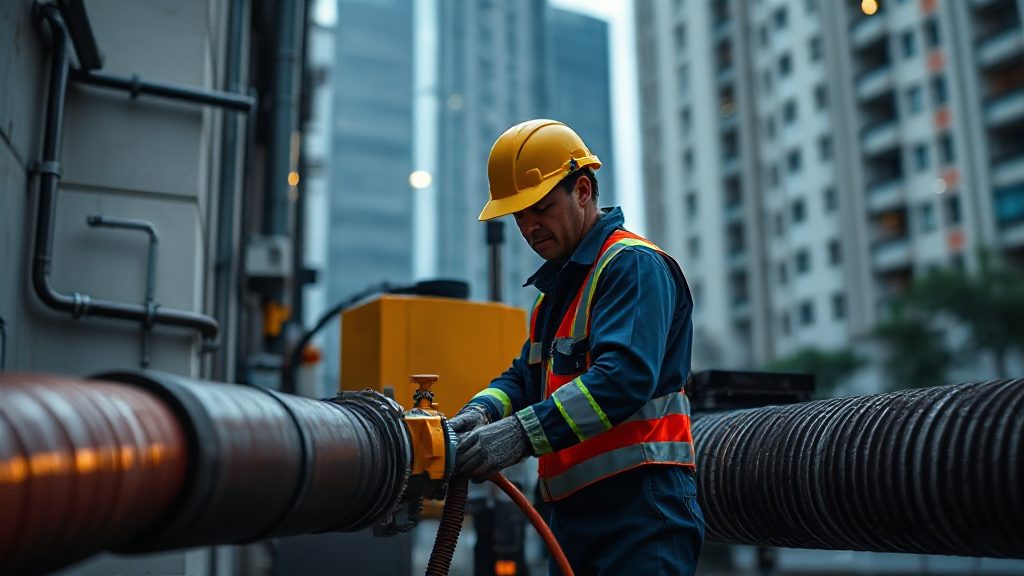
What Should You Have Ready Before Calling a Desentupidora em Sorocaba SP?
Before you dial, have four things ready: the exact address with any unit or block reference, a short description of what is backing up and where, the time the problem started, and whether the property is residential or commercial. With those details in hand, a desentupidora em Sorocaba SP can triage the call in minutes instead of spending the first conversation collecting basics. This checklist is written for the person on site — the tenant, the síndico, the store manager — who has to decide fast and still get the right crew.
Why the First Five Minutes Decide the Outcome
Drain and sewer calls are rarely identical, and the difference between a slow sink and a flooded service corridor changes which equipment rolls out. A crew that knows the backup is in a ground-floor restaurant grease line arrives with different tooling than one sent to a residential stack with multiple units affected. Giving clear information early is the single biggest lever you control.
It also protects the property. When you can say whether water is rising in a floor drain, a toilet, or a laundry tub, the technician can advise you to stop using fixtures on that branch before arrival. That one instruction often prevents a small overflow from becoming a cleanup job. The checklist below turns that conversation into something you can prepare in advance, even before a problem happens.
The Pre-Call Checklist: What to Gather Before You Dial
Location and access details
Write down the full address, the building name if there is one, and the nearest cross street. Note gate codes, concierge hours, and whether the service point is in a basement, a back lot, or a kitchen. For condominiums, include the block and unit, because a desentupidora Sorocaba team may need to enter through a common area rather than a private door.
Symptom notes
Describe what you see and smell: slow drainage, gurgling, sewage odor, water backing up in more than one fixture, or a floor drain that bubbles when appliances run. Mention how long it has been happening and whether it started after heavy rain, a grease-heavy meal service, or a recent repair. These clues point to a blockage type before anyone lifts a tool.
Property and usage context
State whether the site is a house, apartment, restaurant, clinic, or warehouse. Commercial kitchens and laundries load pipes differently from homes, and that affects the method chosen. If you manage a building, note how many units share the affected line. A desentupidora Sorocaba SP crew uses this to estimate scope and to decide whether a camera inspection should be scheduled alongside the clearing work.
Contact and decision authority
Give a mobile number that will be answered on site, plus the name of whoever can approve the service. In rented properties or managed buildings, confirm who signs off before the truck arrives. This avoids the classic delay where a technician is ready but nobody on site can authorize the job.
Choosing Between the Alternatives You Will Be Offered
Most providers in the region work from the same short menu of methods, so the real comparison is about fit, not brand. Ask which approach is planned and why. The table below is a practical way to weigh what you are told.
| Method | Best suited to | What to ask before agreeing |
|---|---|---|
| Manual auger or rodding | Local clogs in sinks, toilets, and short branches | Will the access point be opened inside the property? |
| High-pressure water jetting | Grease, scale, and sediment in longer lines | Is the pressure safe for the pipe material? |
| Camera inspection | Repeat blockages, root intrusion, collapsed sections | Is a recording or report included? |
| Septic tank pumping | Properties not connected to the public network | Where is the tank, and is the lid accessible? |
A cautious provider explains trade-offs instead of promising a single fix for every case. If a quote arrives without any question about pipe age or blockage history, treat that as a warning sign. The right method depends on what is inside the pipe, not on what is easiest to sell.
Common Mistakes That Turn a Small Blockage Into a Big Bill
The most expensive errors happen before the call, not during it. Pouring chemical drain cleaner into a fully blocked line can leave caustic liquid sitting against the pipe and splash back when it is finally opened. Flushing a toilet repeatedly to test whether the problem cleared usually adds water to an already full branch.
Another frequent mistake is describing only the fixture you noticed. Sewer backups often show up first at the lowest drain, while the actual obstruction sits further along the shared line. Mention every affected point, even ones that seem minor. Finally, avoid hiring on price alone without asking about availability and response time; an emergency service that cannot arrive promptly leaves you managing the mess longer.
- Do not keep using water fixtures on the affected branch.
- Do not mix chemical products or combine them with a plunger.
- Do not clear a grease trap into the same drain that is blocked.
- Do not approve work without confirming who pays and how.
After the Crew Leaves: Verifying the Job and Preventing a Repeat
Before the team packs up, run water at every fixture on the affected line and watch the lowest drain. Ask what was removed and where the obstruction sat, because that tells you whether the cause was local or systemic. If the same line has blocked twice within a season, request a camera inspection rather than another clearing; repeated visits are a symptom, not a solution.
Keep a short maintenance log: date, method used, location, and any recommendation. For kitchens, schedule grease trap cleaning on a fixed interval instead of waiting for a backup. For buildings, share the findings with residents so they stop sending wipes, hair, and food waste down drains. A written record also helps the next technician start further ahead, which shortens the next visit and reduces the chance of an emergency call at an inconvenient hour.
Preparedness is the through-line here: the address, the symptoms, the access details, and the decision-maker, all captured before the phone rings. That small stack of information is what separates a quick, correctly equipped response from a long night of guessing.

Leave a Reply