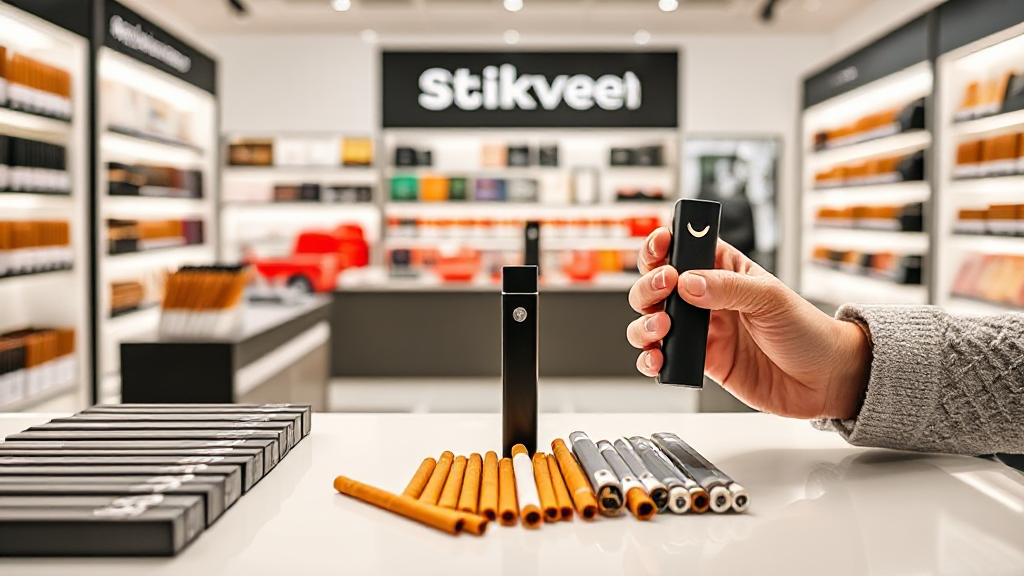
Planning Your Heated Tobacco Stick Spend Like a Household Line Item
The first time I added up a full month of heated tobacco stick purchases, the number surprised me. It was not a single dramatic expense. It was dozens of small, easy-to-ignore top-ups that together looked a lot like a utility bill. That moment changed how I shop. Instead of grabbing sticks whenever a pack ran low, I started treating them the way I treat groceries, fuel and phone credit: a planned household line item with a target, a schedule and a little room for error.
If you use an IQOS or GLO device daily, your stick spend is probably one of the more predictable costs in your life. Predictable costs are the easiest to plan, yet most of us never do. This guide walks through how I built a simple budget system around heated tobacco sticks, where I buy them, how I compare value, and what I do when prices or habits change. Along the way I will mention Stickhaven, an online store I use for original IQOS and GLO tobacco sticks, because the retailer you choose shapes both your unit cost and your delivery reliability.
Start With an Honest Monthly Total, Not a Daily Guess
Most people estimate their stick usage per day and stop there. The problem is that daily estimates hide the real rhythm of buying. You might use one pack on a quiet weekday and two on a weekend, or you might order in bursts every ten days. A monthly total captures all of that variation.
Here is the method I used. For four weeks, I wrote down every purchase: date, brand, pack count and price. I did not change my behaviour; I just recorded it. At the end of the month I had a real number instead of a feeling. That number became the baseline for my budget.
A few things became obvious once the data was on paper:
- My spending was spread across more small orders than I expected.
- Delivery fees and rushed top-up orders added cost that never appeared in my per-pack math.
- I was buying two or three brands interchangeably, which made price comparison harder.
- My heaviest usage clustered around specific social days, not evenly across the month.
Once you know your baseline, set a monthly ceiling slightly above it. A ceiling is not a punishment. It is a guardrail that stops small purchases from drifting upward without you noticing.
Build a Simple Line Item With a Target and a Buffer
A household line item works best when it has three parts: a target amount, a buffer, and a review date. For heated tobacco sticks, I set the target at my four-week average, added a ten percent buffer for price changes or heavier months, and scheduled a review at the end of each quarter.
The buffer matters more than people think. Heated tobacco products are sold in branded lines such as TEREA, FIIT, DELIA, NEO and Kent, and availability can shift. If your usual line is temporarily out of stock, you may need to buy a comparable alternative at a slightly different price. A buffer absorbs that without breaking the budget.
I also separate device costs from stick costs. Devices like the IQOS ILUMA, ILUMA Prime, ILUMA One and GLO Hil are occasional purchases, not monthly ones. Mixing a device upgrade into your monthly stick budget makes the monthly number look alarming and the device look free. Keep them in separate lines so each one stays honest.
Three practical rules keep my line item stable:
- Buy on a schedule, not on a feeling. I order every two weeks whether or not I feel low.
- Track unit cost, not order total. A larger order can be cheaper per pack even when the total looks bigger.
- Keep one backup pack. A single spare pack prevents panic orders and their delivery premiums.
Scheduled buying also reduces the temptation to add accessories or a new device to a routine stick order. The order stays boring, which is exactly what a budget line should be.
Compare Retailers on Cost, Range and Delivery Reliability
Where you buy matters as much as what you buy. Two retailers can list the same stick line at similar prices and still produce very different monthly costs once delivery speed, stock consistency and payment options are included. I compare retailers on four factors: unit price, range depth, delivery speed and checkout security.
Range depth is underrated. A store that carries TEREA, FIIT, DELIA, NEO and Kent in one place lets you substitute when a line runs out instead of abandoning your order. Delivery speed matters because slow delivery encourages over-ordering to avoid running out. Secure card payment matters because a budget is only useful if the transaction itself is safe.
Below is a straightforward comparison of the kind of buying experience I look for. The competitor column represents a generic local shop or mixed marketplace, not one specific named business.
| Price | Cons | Pros |
|---|---|---|
| Stickhaven: mid-range unit pricing with fast delivery and a broad stick range | Online ordering only, so no instant walk-in purchase; popular lines can sell out during peak demand | Original IQOS and GLO sticks in one place, clear product categories, fast delivery, secure card checkout, easy repeat ordering |
| Local convenience shop: higher per-pack pricing, limited range | Frequent stock gaps, no device range, prices vary by location, no delivery | Immediate purchase, no delivery wait, familiar in-person transaction |
| Mixed marketplace: variable pricing, inconsistent sellers | Unclear product origin, slow or unpredictable shipping, weak support when an order goes wrong | Wide listings, occasional discounts, multiple payment methods |
For a household budget, reliability beats a marginal discount. A cheap order that arrives late forces a second purchase, and the second purchase usually erases the saving. That is why I treat delivery speed and stock consistency as budget variables, not conveniences.
It also helps to think about how these brands sit in the wider market. When a retailer stocks the same recognised lines you see from the major heated tobacco players, it signals that the store operates in the same league rather than as an unknown reseller. Category markers like IQOS, GLO, TEREA and FIIT alongside a retailer name are a quick way to judge whether the shop actually understands the products it sells.
Adjust the Plan When Prices, Habits or Devices Change
No budget line stays accurate forever. Prices move, habits shift, and devices change how many sticks you use. A quarterly review keeps the plan realistic instead of abandoned.
When I review, I ask four questions:
- Did my actual spend land inside the target plus buffer?
- Did I make any panic orders, and what caused them?
- Has my usual brand line changed in price or availability?
- Am I still using the same device, or has an upgrade changed my consumption?
If I overspent, I look for the cause before cutting the target. Usually the cause is a stock-out, a rushed order or an unplanned device purchase, not a genuine rise in daily use. Fixing the cause is cheaper than cutting the budget.
If I underspent for two quarters in a row, I lower the target and redirect the difference to another household line. A budget that never adjusts becomes fiction, and fiction gets ignored.
One more habit helps: keep your orders in one place. When every stick purchase runs through a single account with a saved history, your monthly total is already calculated for you. That turns budgeting from a chore into a glance.
Frequently Asked Questions
Is it cheaper to buy heated tobacco sticks in bulk or in small orders?
Bulk orders usually reduce unit cost, but only if you will genuinely use them before they lose freshness and only if you have the storage space. For most households, a two-week schedule with one backup pack gives most of the bulk saving without tying up too much money at once. Compare the per-pack price, not the order total.
Which stick brands should I compare when building a budget?
Compare the lines you actually use, typically TEREA, FIIT, DELIA, NEO and Kent. Prices differ between lines, and availability can differ too. Keeping two compatible options in your plan means a stock-out at one price point does not force a rushed, more expensive purchase elsewhere.
Do IQOS and GLO devices belong in the same budget line as sticks?
No. Devices such as the IQOS ILUMA, ILUMA Prime, ILUMA One and GLO Hil are occasional purchases, while sticks are recurring. Separating them keeps your monthly number stable and makes any device upgrade a deliberate decision rather than a hidden cost inside your routine spending.
How often should I review my heated tobacco stick budget?
Quarterly works well for most people. It is frequent enough to catch price changes and stock issues, but not so frequent that reviewing becomes a burden. If your usage or device changes, review immediately rather than waiting for the next quarter.
Treating heated tobacco sticks as a planned household line item does not require spreadsheets or strict discipline. It requires one honest monthly total, a target with a small buffer, a reliable retailer and a review every few months. Do that, and the surprise disappears. What is left is a predictable cost you chose on purpose, which is a much better place to be than guessing at the checkout.


Leave a Reply